New Photos in the AS220 Flat File Project for 2019!
I'm excited to announce five new photographs, "Providence Fourth of July", "Fall on the Ten Mile River", "Storms Over Point Street", "Spring Afternoon on South Water", and "Clear Currents at WaterFire" are now being showcased in the AS220 Flat File Project! These photographs will be showcased in the Flat Files Project through Summer 2020 and are available for sale exclusively through AS220's Art + Editions online shop.
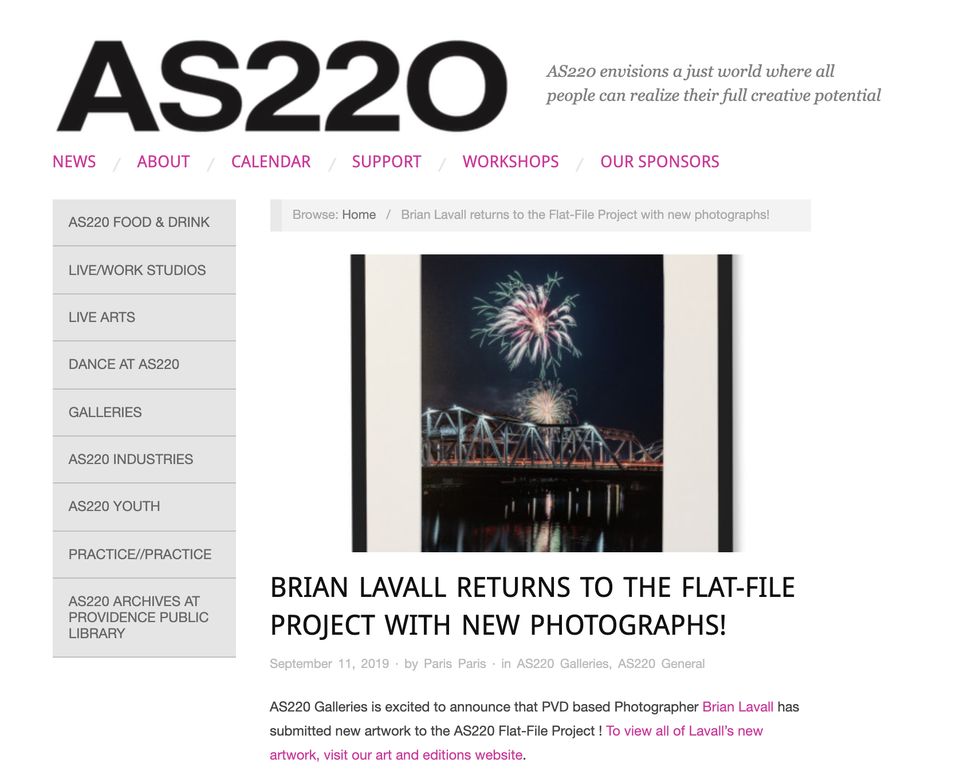
This is my second year being featured in the AS220 Flat File Project. AS220 is a non-profit community arts organization in Providence, Rhode Island. The Flat Files Project is a collection of art works kept in a set of file drawers in the AS220 Project Space Gallery and occasionally showcased in various gallery spaces across AS220's facilities.
In addition, these photographs are highlighted in a new post on the AS220 blog featuring my "words about the works" for these new images in the Flat Files Project. Thanks again to Neal and Paris at AS220 Galleries for this amazing opportunity!
Words About the Works
This was originally published on the AS220 blog when these photographs were introduced into the Flat File Collection in 2019. It's republished here for archive purposes.
I'm excited to showcase these new prints in the AS220 Flat Files Project. These five photographs are a few of my favorites from the last year that I've taken in Providence and the surrounding area.
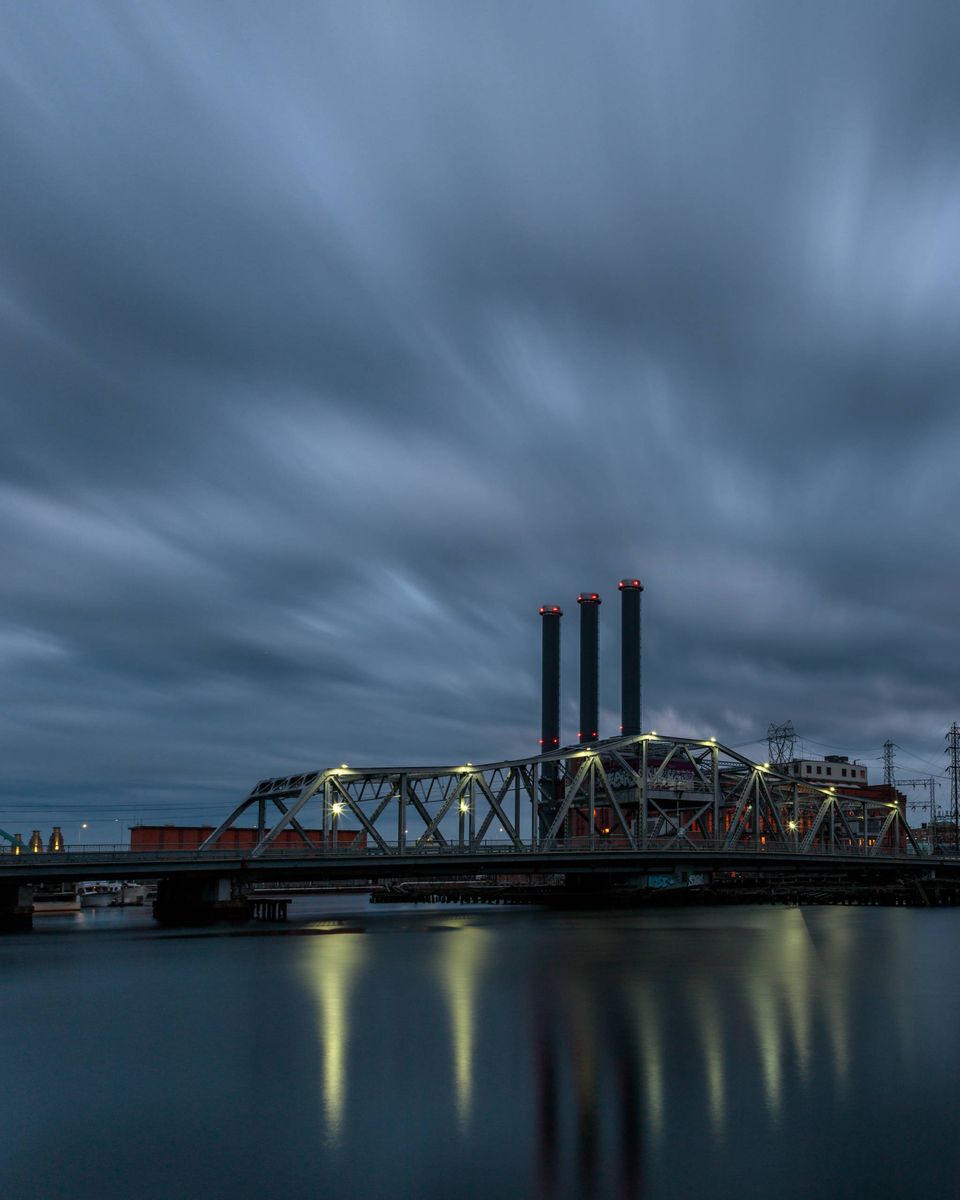
Storms over Point Street
I took this photo on a windy, stormy evening in June 2018. Using a neutral density filter, I was able to photograph this in a 60-second long exposure, capturing the motion of the storm clouds racing across the sky. The industrial architecture of Point Street Bridge and the Manchester Street Station power plant compliment the storm clouds perfectly, giving this photograph a gritty, stormy, and somewhat apocalyptic feel. It's easily one of my favorite photographs I've ever taken.
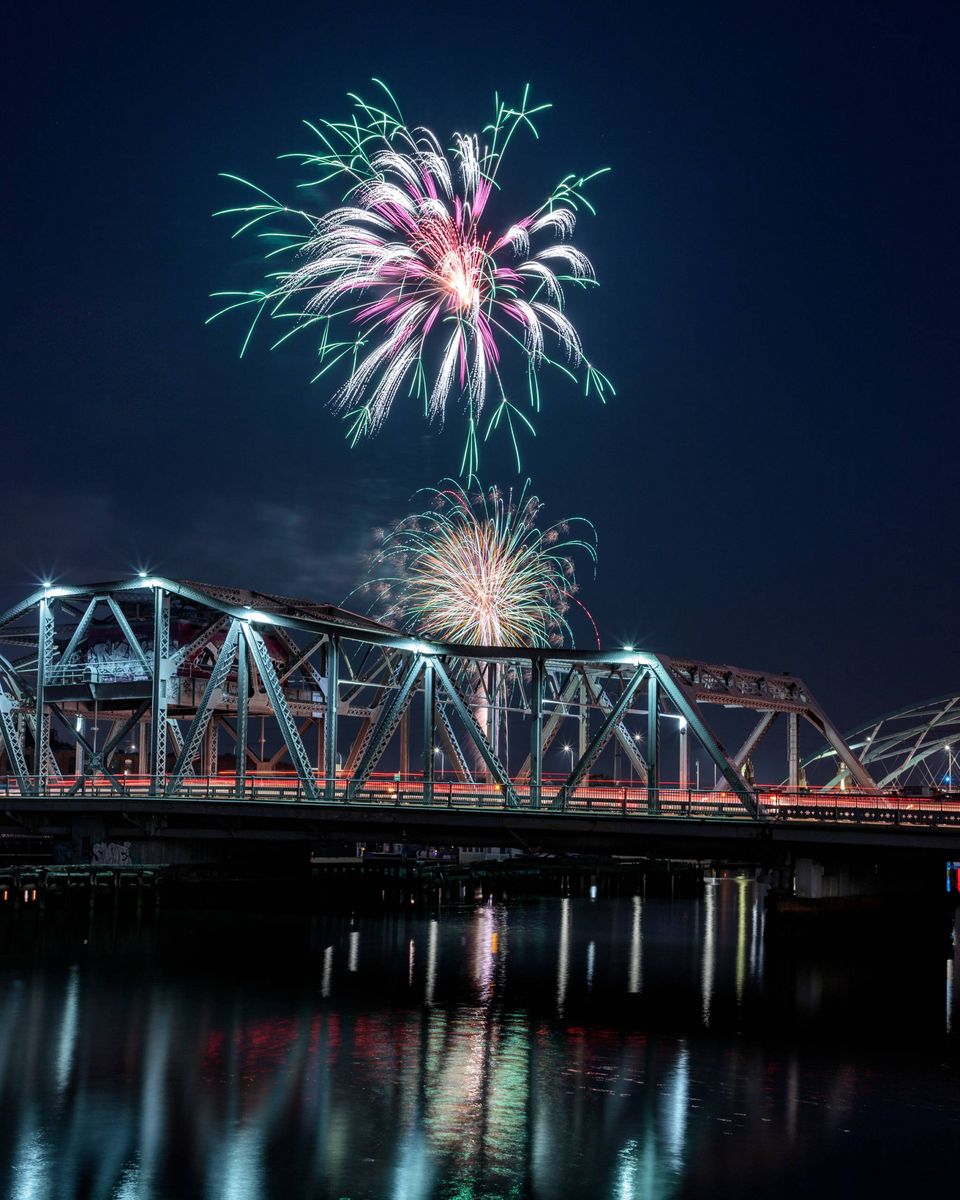
Providence 4th of July 2018
After being thrilled with the results of "Storms over Point Street," I decided to head back over to the Point Street area to capture Providence's 4th of July fireworks over the harbor. Initially, I set up on the Point Street bridge with the plan to shoot the fireworks over the Iway bridge and boats docked in front of the Hot Club. About 10 minutes through the fireworks display, I decided I'd risk it and move to see if I could capture the fireworks over the Point Street bridge too. After scrambling across the road and getting my gear set up, I was able to get a few more shots in just before the grand finale. This single 15-second long exposure ended up being my favorite by far. I love how the colors and tones of the firework trails match the bridge, and the light trails from the traffic driving over the bridge ties it all together perfectly.
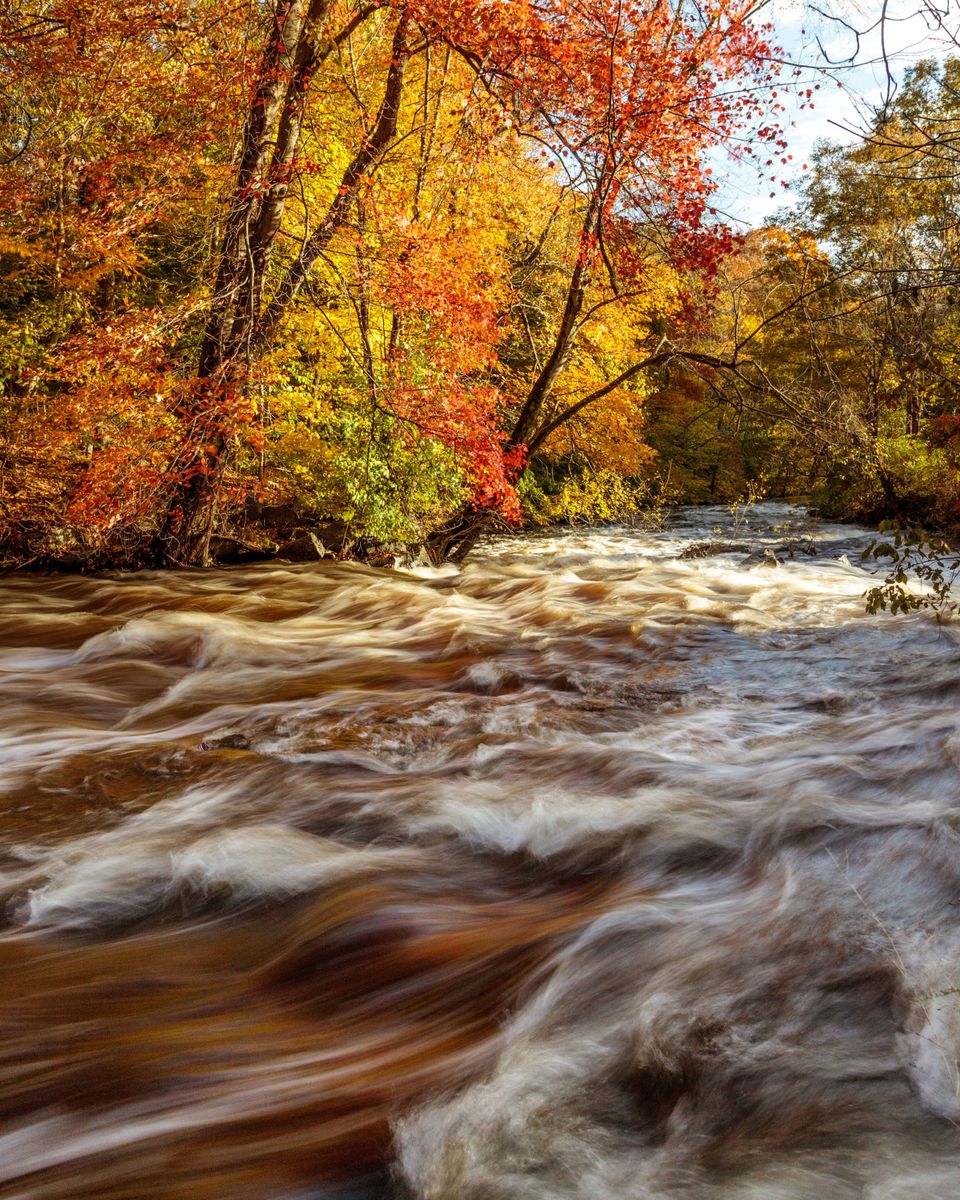
Fall on the Ten Mile River
I think most people in New England say Fall is their favorite season, and I'm no exception. Last Fall we lucked out weather-wise and were treated to one of the best foliage seasons I can remember in a long time. On the afternoon of October 29th, I went over to Hunts Mills along the Ten Mile River in East Providence. Using a neutral density filter, I was able to slow down the exposure just enough to capture the motion of the water without losing the ripples and cascades of the rushing river just below Hunts Mills Falls. The resulting photograph ended up being my favorite from the entire Fall of 2018.
Spring on South Water Street
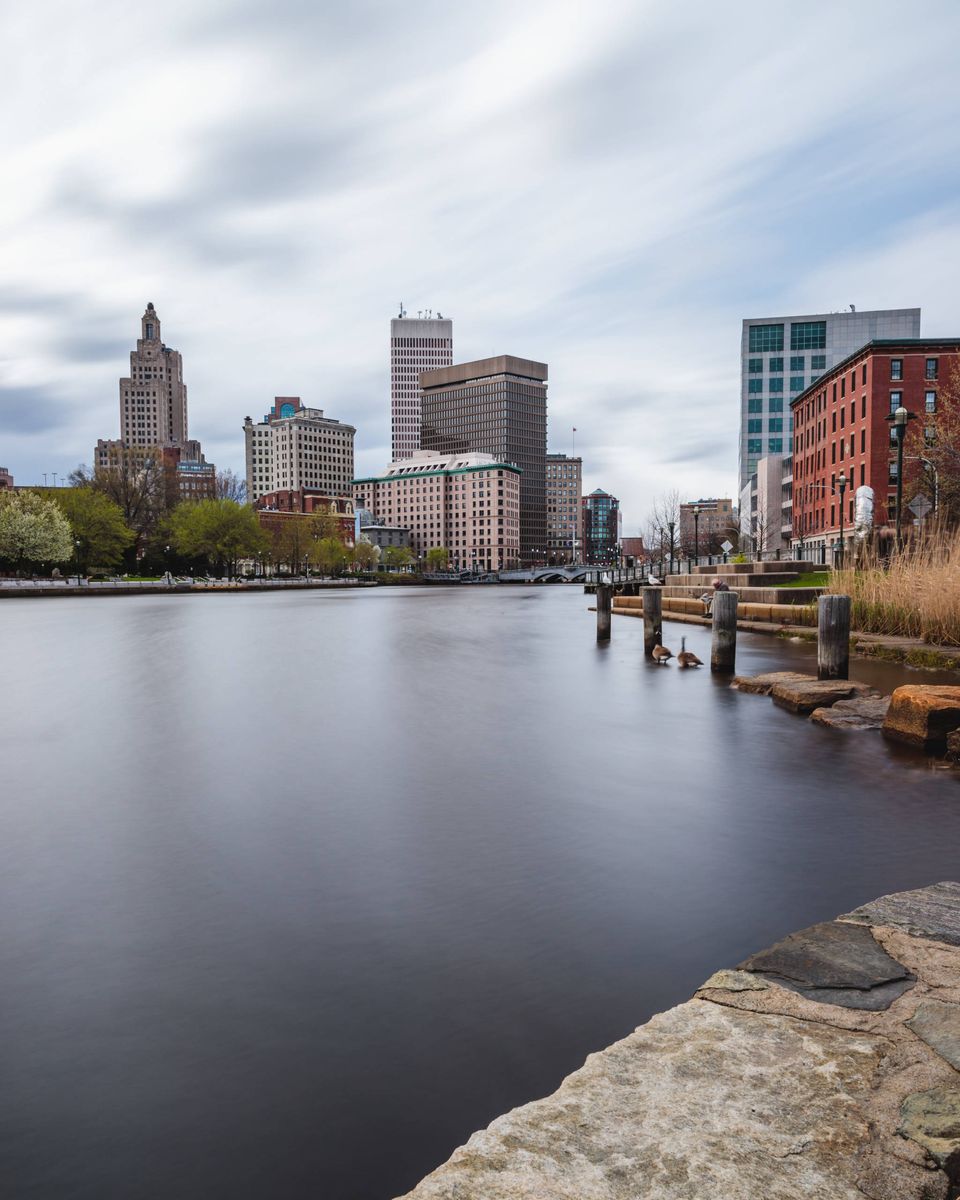
This past spring, I met up with some friends on a Saturday afternoon for some city shooting in Providence, and we ended up down by the river off of South Water Street. The sky and weather conditions turned out perfect, with just enough wind and clouds for some daytime long exposures. Using a 10-stop neutral density filter and an exposure time around thirty seconds, I was able to capture the wind-blown clouds and water. Somehow, these geese managed to pose the entire time!
Clear Currents 2019
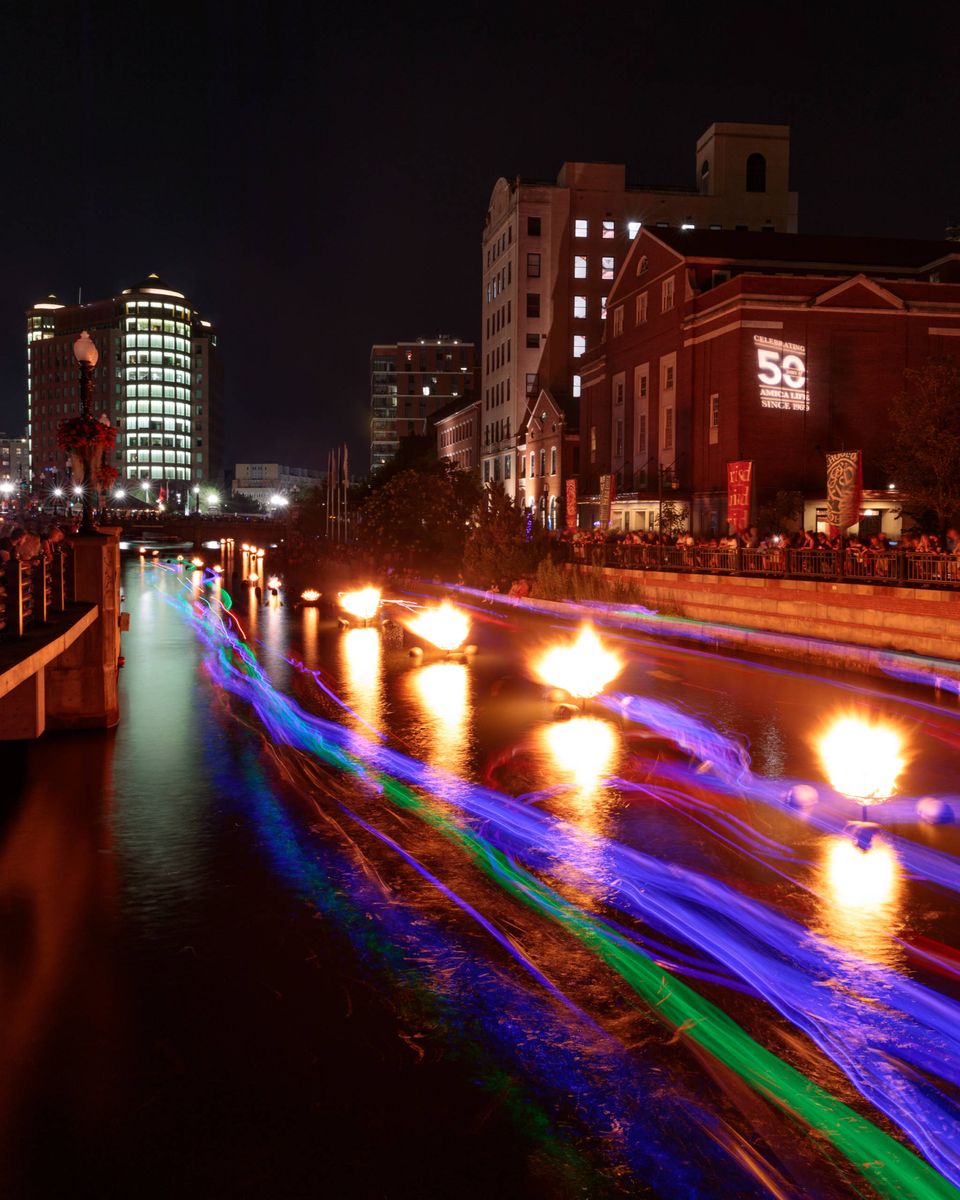
As an artist living in the Providence area, WaterFire has long been one of my favorite subjects. Once a year, WaterFire hosts their "Clear Currents" event, where people paddle kayaks mounted with illuminated neon koi fish in "schools" up and down the rivers between the fires. This year I decided to shoot some long exposures of the koi schools in an attempt to capture light trails on the water. I ended up stacking three 20 second exposures in photoshop for the final image, allowing me to capture 60 seconds of light trails without over-exposing the buildings around the river.
Thanks again to AS220 for the opportunity to showcase my photos! Follow me on Instagram (@blavall) to see more of my latest work, and stay tuned for information about my gallery exhibition at AS220 in Summer 2020!
Q&A
This Q&A was published a few months after these photographs were added to the Flat File Collection on the AS220 blog. It's also been preserved here for archive purposes.
1. Can you describe your process of capturing a photograph? How does this process vary from site to site?
For me this varies a bit depending on where I am and what type of shoot I’m doing. Often times when I’m out in the city or traveling somewhere, I’ll shoot in a “run-and-gun” documentary style, where I’m essentially walking around an area looking for interesting and spontaneous compositions and images. I mostly do this handheld with a standard-range zoom lens. This allows me to capture the random moments, like a perfectly placed car or person in a street scene, that really bring together an image. Street photography is often the art of capturing that spontaneity, and while my work in this area isn’t necessarily street photography in the traditional sense, I definitely draw inspiration from it in the way I shoot some of my streetscapes.
A significant portion of my work, including my long exposure landscapes, does involve a bit more location scouting and planning. Sometimes I use online maps and satellite imagery to get an overview of an area and scope out the best compositions, and I also use an app to track where in the sky the sun and/or moon will be during a shoot to help plan where the light will fall in the image. Since these shoots usually happen during the “golden hour” or “blue hour” when the light changes quickly, I like to have a plan in place before I start, so I don’t waste any light. When I arrive on location, I’ll usually walk around a bit (sometimes shooting handheld) to get a feel for the area, plan out the few main compositions I’d like to capture, and then I’ll set up my tripod and gear to get started.
Most of my shoots end up involving a bit of both these styles. For instance, if I’m going on a photo trip somewhere, I’ll plan ahead to put together a brief itinerary with a list of locations/images I’d like to capture. And while I’ll make it a point to hit these few spots, I’ll also leave time to do some more spontaneous shooting in between.
2. To what dangerous/hilarious lengths have you gone for a photograph?
I try not to be too reckless out on shoots, but sometimes you have to push the envelope a little bit in order to get the shot you want. Some people would probably call me crazy for going out and driving around in a blizzard for photos, but for me that’s part of the adventure. There’s also the occasional shoot that could involve something like climbing on the rocks near the water to get the best composition, but I still try to be as safe as possible.
3. Where do you see yourself and your artwork in 5 years?
At the very least, I hope I’ll be able to look back and continue to see the progress I’ve made. When I look back now and compare my recent work to photographs from five years ago, I’m proud of how far along I’ve come and how much I’ve learned, and it drives me to keep working to improve my skills further.
I am also looking forward to expanding how I share my work and the mediums I work with. The last couple of years I’ve mostly been shooting photographs to share on Instagram, and I’m at the point where that feels a bit limiting for me. I recently updated my website, and a major part of that is a new blog which I designed around a concept I'm calling "photo stories." I hope to use this new format to share more extensive photo sets and in-depth stories about the various trips I go on and places I visit to photograph.
Finally, my initial foray in visual arts was in making short movies with my friends as a teenager, and it’s been a long time since I’ve done any real filmmaking, so I hope to come full circle and get back into video. I have some early plans in the works for a couple of short art films, and hopefully five years from now, I’ll have at least one of them completed!
4. Do you have any photo exhibitions you are preparing for?
The next big exhibition that I’m preparing for will be a month-long gallery exhibition at the AS220 Main Gallery in August 2020. I’m really excited about this, as it’s going to be my biggest exhibition yet.
The majority of my work over the last few months in preparation for next summer’s exhibition has been working on a major redesign of my website that I launched in late October. I’ve been planning and working on this website update for nearly a year, and I wanted to get it finished and live this fall so I could start showcasing and promoting for the exhibition once the calendar hits 2020.
Now that the site is complete, I’ll be spending the next few winter months planning and putting together everything for the exhibition next summer. I’ll be announcing the title and theme of the show in early Spring 2020, so stay tuned for more updates!
5. What in your personal life has influenced you to choose your career?
My nine to five career is as a systems administrator and web developer. Although I went to college for Communication Technology & Media Studies and planned to get into a media production career, I was always a techie growing up. After college I ended up starting a small web development company. About five years ago my experience from the web design company and video production from college led me to a hybrid role at a local university, which has since grown into a career in systems administration.
My current job role is quite varied. Some days I’m able to utilize my creativity doing web development, and other days I get to use and play with lots of cool new tech hardware and software. For me some variety is important to keep the job interesting, and having a career where I can use my creativity, yet is quite different from photography, helps me keep my passion for the arts strong.
6. What do you do to keep yourself motivated and interested in your work?
As I mentioned above, my career is in information technology, so photography is my escape from the day-to-day grind. Since most of my shoots are purely to create art for fun, I’m able to shoot whatever I want, and that in itself helps to keep me motivated. On top of that, one of the perks of landscape photography is that it can be done pretty much anywhere, so it’s always great to get out to travel and explore new places. That sense of adventure is always a major motivation.
On another note, one of my favorite parts about photography is how a photograph tells a story about a single, unique moment in time. Every time you visit a location, the lighting and weather conditions will be different. Even if you’ve been there a hundred times before, there’s always an opportunity to capture new images and tell a new story about that trip at that specific moment in time.
7. If you could interview a creative person (past or present), who would that person be? Please explain your answer
I know a lot of photographers would probably say this, but for me, I would have to pick Ansel Adams. As a kid, American history was one of the subjects that I found interesting in school, and seeing a lot of his work from the American west and our National Parks is one of the things that first piqued my interest in still photography.
Adams was one of the original trailblazers of landscape photography. Using the “zone system” he pioneered with Fred Archer, he was able to capture the full spectrum of tones in his images, leading to stunning, sharp, and high contrast black and white photographs like “Tetons and Snake River” (1942). I definitely draw some inspiration in my long exposure images from Ansel Adams’ work, and if I had the opportunity to interview any creative past or present, he would definitely be my choice. I can only imagine what a photographer like myself would have been able to learn just spending a single afternoon out shooting with Ansel Adams.
8. Do you think that you would be able to teach what you do?
I’m comfortable enough with a camera at this point to teach the basics about things like gear setup, exposure, composition, and basic editing and retouching. Like most of the arts, photography is something where you can pick up on the basics pretty quickly, but spend years developing and honing your own style and techniques. I know I’m still learning new things every time I go out for a shoot. Photography is an art form that truly takes a lifetime to master, and that continuous challenge of always trying to push forward with new ideas and styles is one of the things that makes photography so interesting to me.
9. What do you wish to accomplish with your art?
Since photography is largely a hobby/passion project for me, my goals are pretty simple. I love that photography forces me to get out and explore the world, and whether I’m close to home or traveling far away, photography allows me to capture the beauty of these amazing places and share stories about them with my family, friends, and the world. When you break it down into the simplest terms, photography is the art of capturing light to record the story of a unique moment in time. Being able to share these unique moments, where you make the ordinary appear extraordinary and captivate people’s imaginations to make them more deeply appreciate the world around them, is one of the things I hope to do with my photography.
10. What are your words of wisdom for someone starting out in your field?
Photography is like anything in life in that learning and eventually mastering something takes lots of dedication and practice. I look back now at photographs I took when I was first starting out and sometimes cringe at obvious mistakes or things that I would do differently now. That’s all part of the learning experience, and it’s great to be able to look back at old work and see how far I’ve come.
My best advice to anyone starting out is to shoot, shoot, and shoot some more, even though most of the images you take won’t be “keepers”. Study the works of people who inspire you, but don’t be discouraged by comparing your work to their portfolios. Even the best photographers have hard drives full of outtakes and rejected images. Save all of your images (even your bad ones, within reason) to look back at down the road, as analyzing your progression will help you develop and refine your own styles as you gain experience.